
Knapsack spraying coffee
Playing this video requires a marketing consent.
Click anywhere on the video to renew your consents.
Description
Description
Script
Script
 Many perennial crops, including coffee, vary in how they are grown and how large they become as they mature. These changes to the crop’s shape, its internal structure of branches and the density of its leaves provide a challenge if you are to achieve an adequate coverage of spray drops on the targeted vegetation.
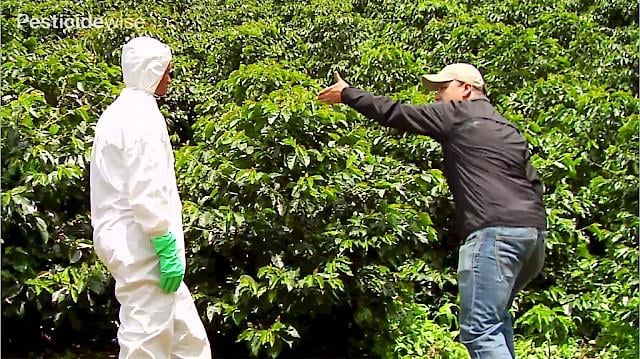 You will need to consider the crop age or size or leaf area index and be prepared to adjust your application method, your water volume rates and re-calibrate your application equipment each time you need to spray. During calibration you will have practiced spraying with water until you have the distribution of drops just right.
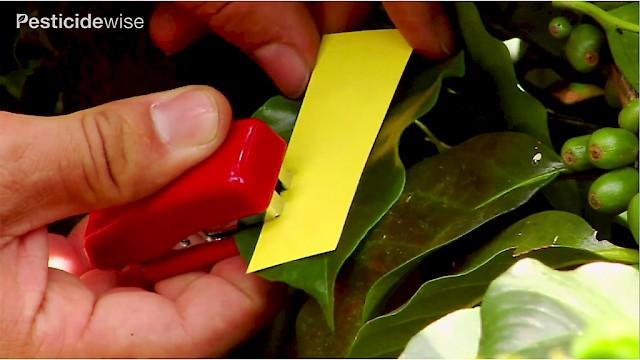 With difficult crops like coffee, it can help to use water sensitive paper at the calibration stage to show you more clearly where the drops are landing within the bush. To do this attach water sensitive paper at various points within the canopy, practice spraying with water and then check the paper to see the distribution of drops which are shown as blue marks.
 The first is not enough, the second is about right and the third is too much. Check our website Stewardship Community for more details of how to use WSP and where to obtain it.
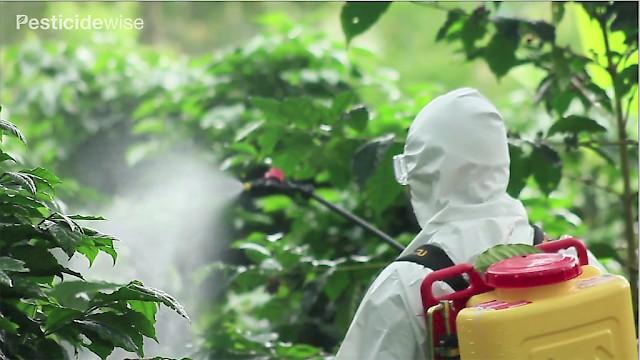 Preferred practices suggest an upward direction of spray is better at getting drops within this type of canopy but local expert guidance must be followed.
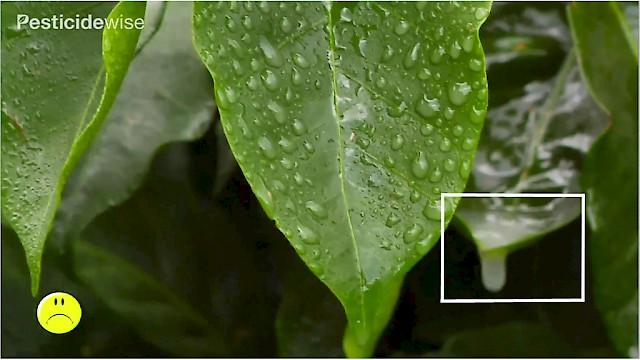 Be careful not to apply too much spray liquid as the drops retained by coffee leaves soon form bigger deposits and run off. Check your pesticide label for specific guidance on spraying your crop.
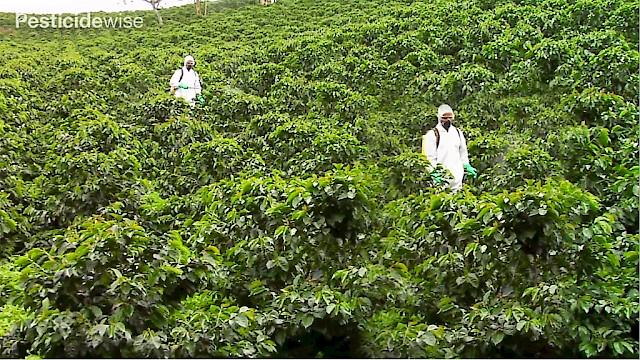 Also note, that if you are part of a team of sprayer operators all spraying the same crop, upwardly projected sprays may drift with the wind and become a risk to others spraying nearby. Take care to protect yourself as well as those with whom you work.